
Richland Parish Arrest Records and Court Charges
Richland Parish arrest records start with the Sheriff's Office or another arresting agency. The official Sheriff site identifies Sheriff Neal Harwell and gives the Sheriff's Office as the local law-enforcement records contact. Arrest records may include the arrest event, booking-related details, a summons or citation, and the initial offense named by law enforcement. Louisiana Public Records Law treats certain initial reports, booking records, summonses, citations, and filed charging instruments differently from investigative files, so the public record boundary depends on who holds the record and whether the matter is still investigative, sealed, juvenile, or otherwise restricted.
The court charge record begins later. The Richland Parish Clerk of Court Criminal Department receives formal felony charges from the District Attorney's Office for matters in the Fifth Judicial District Court. The Clerk's criminal page explains that felony charges are handled through formal filings, while misdemeanors are handled in municipal courts if the offense occurred inside city limits. That distinction matters because court charges after arrest can differ from the arresting officer's initial booking language. A sheriff booking note may name one suspected offense, while the District Attorney may file a bill of information, seek an indictment, amend a charge, dismiss a count, or decline to proceed.
For the custody side, use the sheriff and inmate channels. For the court side, use the Clerk's Criminal Department, the District Court record, and the official court fine and cost payment portal when a payable case is in that system. The complete criminal case file is broader than this charge-focused page because it also includes motions, orders, minutes, evidence handling, pleas, disposition, and sentencing.
How to Find Richland Parish Arrest Records and Charges
Richland Parish does not have one official public database that combines arrest records, jail status, warrants, and filed court charges. Use a channel-based search. For sheriff-held booking, incident, jail, or law-enforcement records, call or write the Richland Parish Sheriff's Office. For formal felony charges and district court criminal filings, contact the Clerk of Court Criminal Department at the courthouse. For payable court fines and costs, the official Software & Services payment portal linked from the Sheriff site can show case and charge fields when a matching record is payable or trackable.
- Start with the record type: booking or arrest information belongs with the Sheriff's Office, while formal charges belong with the Clerk's criminal court record.
- For court charges, search the court payment portal by case number and defendant last name, or by defendant last name and date of birth, if the matter is payable in that system.
- Read the charge list carefully. The template field inventory includes charge, offense, fine due, cost due, other due, total, and amount to pay where partial payment is available.
- If the payment portal does not locate the case, contact the Clerk's Criminal Department for felony filings, bills of information, indictments, minutes, motions, orders, and subpoena or bond-forfeiture records.
- For booking records not visible online, use the Sheriff's written public-records process or call (318) 728-2071 for current instructions.
For people in custody, the official Sheriff inmates page should be checked, but it was under maintenance during the research pass. Louisiana VINELink can be a statewide custody-notification fallback after custody exists, but it is not a Richland Parish charge database and does not replace the Clerk's court file.
The official Louisiana VINELink custody path is useful when an arrest has moved into custody-status questions rather than court-charge research.

Use VINELink as a custody notification and status channel, then confirm formal Richland Parish court charges with the Clerk or court record.
How Charges Get Filed After an Arrest: Complaint, Information, and Indictment
An arrest does not automatically create a conviction or even the final charge list. After an arrest, the District Attorney screens the matter for prosecution. In Richland Parish, the official research identifies Penny Douciere as District Attorney for the Fifth Judicial District, and the Clerk's Criminal Department is the Richland Parish office that receives formal felony charges. The formal filing can be a complaint, bill of information, or indictment depending on the case type and procedural path.
| Complaint | Information | Indictment | |
|---|---|---|---|
| Filed By | Officer or prosecutor, depending on context | District Attorney | Grand jury through the court process |
| Common For | Initial criminal accusation or lower-level matters | Many Louisiana felony prosecutions | Serious felony matters requiring or using grand jury action |
| Richland Parish Custodian | May begin with law enforcement or court | Clerk Criminal Department once filed | Clerk Criminal Department once filed |
| Record Use | Shows the first accusation | Shows the formal DA-filed charge | Shows the grand-jury formal charge |
The Clerk's criminal office also handles subpoenas requested by the State or defendant, bond-forfeiture notices, minutes of court proceedings, oaths to witnesses and jurors, evidence introduced in court, and imaged motions and orders. Those materials belong to the broader criminal case file, but the charging document is the central point where arrest language turns into a formal court charge.
Charge Status and What It Means
Charge status can change while a case is pending. A charge may be pending at arraignment, amended before plea negotiations, reduced as part of a disposition, dismissed by the court, or ended by a prosecutor's nolle prosequi decision. Richland Parish users should compare the latest court minutes, orders, and disposition entries instead of relying only on the first arrest or payment-screen result.
| Status | What It Means |
|---|---|
| Pending | The charge has been filed or is awaiting further court action. It is an accusation, not a conviction. |
| Amended / Reduced | The filed charge changed, often by prosecutor action, plea negotiation, or court order. |
| Dismissed | The court record reflects that the charge did not proceed to conviction on that count. |
| Nolle Prosequi | The prosecutor chose not to continue the charge, subject to the procedural effect shown in the court file. |
| Disposed | The charge has reached an outcome such as plea, verdict, dismissal, or sentence entry. |
Charges vs. Convictions
A charge is an accusation filed into the court process. A conviction is the result of a guilty plea, verdict, or other qualifying adjudication. Richland Parish arrest records can show someone was arrested, and court charge records can show what the District Attorney filed, but neither fact alone proves the person was convicted. Always look for the latest disposition, sentence, or dismissal entry before describing the outcome.
| Charge | Conviction | |
|---|---|---|
| Stage | Accusation after arrest or investigation | Final or qualifying case outcome |
| Decision Maker | District Attorney, grand jury, or court process | Judge, jury, or plea accepted by court |
| Burden of Proof | Probable cause or charging standard | Beyond a reasonable doubt for trial conviction |
| Public Record | Often public once filed, unless restricted | Often public unless sealed, expunged, juvenile, or restricted |
Sealed vs. Expunged Records
Louisiana expungement should not be described as physical destruction of the record. Louisiana Code of Criminal Procedure article 972 defines expungement as removal from public access, while protected agencies may retain access where the law allows. The Richland Parish Clerk's official document list includes an expungement packet with procedure, motion, response affidavit, fee-waiver certification, rule to show cause, order, and order of expungement of arrest or conviction record. The court order, not the Sheriff app, controls the change in public access.
| Sealed | Expunged | |
|---|---|---|
| Visibility | Blocked from ordinary public access by court restriction | Removed from public access under Louisiana expungement law |
| Law Enforcement | May retain limited access depending on the order and statute | May retain protected access where Louisiana law allows |
| Richland Parish Starting Point | Contact the Clerk or court that restricted the file | Use the Clerk Civil Filings/Expungements route and the official packet |
Charge Codes and Severity Levels
The court payment template for Richland Parish includes charge and offense fields, plus fine due, cost due, other due, total, and payment amount fields for payable cases. That template does not make the payment portal a complete criminal docket system, but it can confirm charge/payment data for a matching payable case. One arrest can produce several separate counts, and a single case can contain charges with different severities, amended wording, or separate financial totals.
Louisiana charge language may refer to Title 14 criminal offenses, Title 32 traffic offenses, or other Louisiana statutes. The Clerk's Traffic Department specifically identifies Title 32 Uniform Traffic Code examples and Title 14 offenses such as DWI and hit-and-run, while the Criminal Department handles felony charges under the Louisiana Code of Criminal Procedure. For a final reading, compare the charge text, statute, court minutes, and disposition.
The Louisiana State Police maintains the official sex offender registry access path, which is separate from Richland Parish arrest and charge records.
Registry searches answer a different question than arrest records: they identify registry status, not every arrest, charge, dismissal, or conviction in the parish court file.
Statewide and Federal Charge Lookups
State and federal systems should be used only for the record type they actually hold. VINELink is a custody-notification tool. The Louisiana State Police registry is a sex offender registry path. Federal cases are searched separately through PACER and the Western District of Louisiana court systems. None of those systems replaces the Richland Parish Clerk's district court file for local felony charges filed in the Fifth Judicial District Court.
Federal criminal cases, federal habeas matters, bankruptcy cases, Social Security appeals, federal tax cases, and federal prisoner matters are separate from Richland Parish court records. Richland Parish is in the U.S. District Court for the Western District of Louisiana. Federal inmate custody is searched through the Bureau of Prisons, while parish jail custody should be checked through the Sheriff and VINELink channels.
The Federal Bureau of Prisons inmate locator is the official route for federal custody, not for Richland Parish jail booking records.
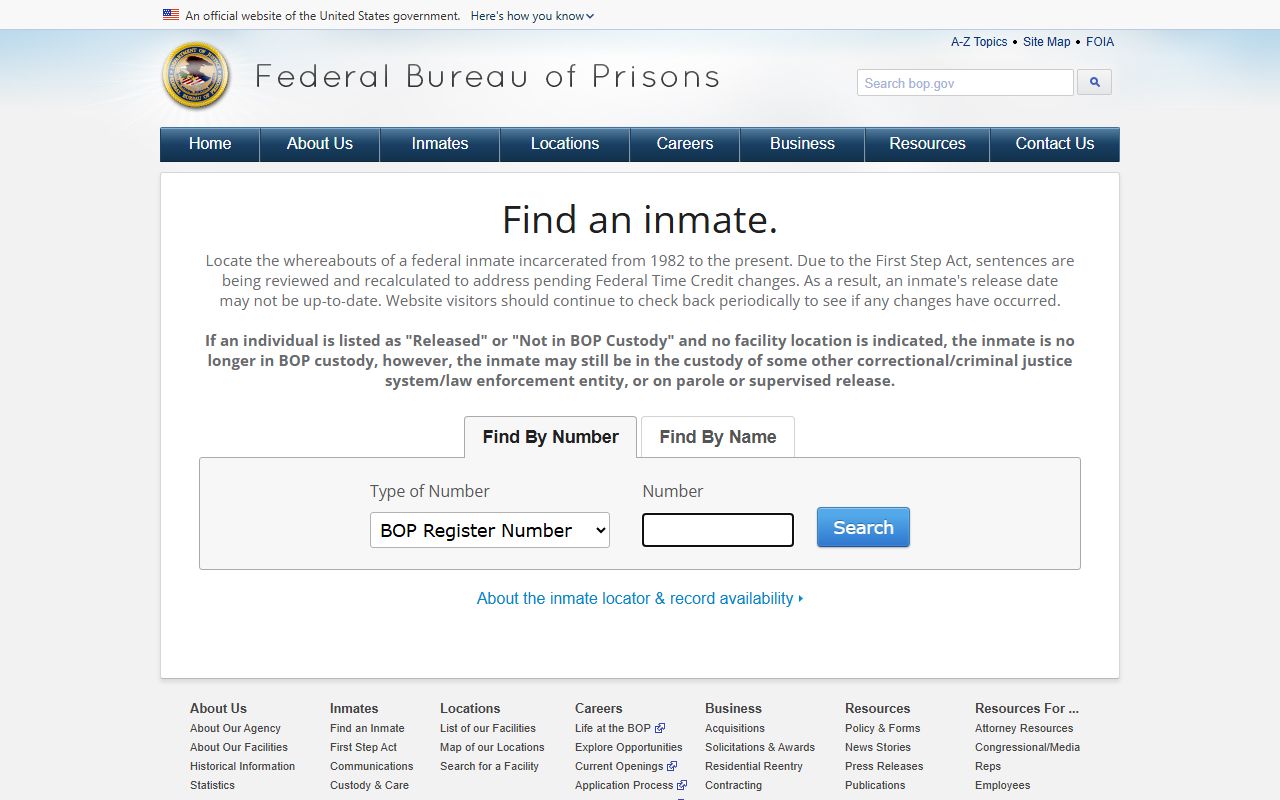
Use BOP only after the custody question is federal; local arrest and formal charge research still starts with the Sheriff and Clerk.
Bankruptcy filings for the area are handled by the U.S. Bankruptcy Court for the Western District of Louisiana, which is not a parish criminal charge source.
Bankruptcy case searches belong in federal court systems and should not be mixed with local arrest or prosecution records.
Appeals from federal district matters go through the U.S. Court of Appeals for the Fifth Circuit, separate from the Louisiana Second Circuit state appellate path.
Federal appellate records may matter after a federal prosecution, but they do not show ordinary Richland Parish arrest records.
Background Check Considerations
Casual public-record lookups and regulated background checks are not the same. A person reviewing Richland Parish arrest records should avoid treating a booking event as proof of guilt and should not use public information for employment, housing, credit, insurance, or other regulated decisions unless the search is handled through a legally compliant consumer-reporting process. Court charge records should be read with their status and disposition, especially when charges were amended, dismissed, expunged from public access, or restricted.
Important: This website is not a consumer reporting agency and cannot be used for FCRA-regulated eligibility decisions.
Restricted Charge Records in Richland Parish
Louisiana law restricts several categories of records. Juvenile records are not ordinary public court records. Sealed files are unavailable to the general public unless a court order permits access. Expunged records are removed from public access rather than destroyed. Adoption and mental-health matters are generally confidential. Law-enforcement investigative records may be withheld under La. R.S. 44:3, even though certain initial reports, booking records, summonses, citations, and filed bills of information can be public in defined circumstances.
The safest practical rule is to ask the correct custodian. The Clerk of Court is the court-file custodian for filed district court charges, while the Sheriff's Office is the practical custodian for incident, booking, warrant, jail, and other law-enforcement records. If a charge record appears incomplete, missing, or inconsistent with arrest information, request the latest court minutes, charging instrument, disposition, and any public order affecting access.